How Liquor Store Automation Is Changing Liquor Store Ownership
Bevly Is Changing What Liquor Store Management Software Should Actually Do
For decades, owning a liquor store meant accepting a tremendous amount of manual work as part of the business.
Distributor deliveries had to be received. Invoices had to be entered. Product costs had to be updated. Inventory had to be counted. Purchase orders had to be created. Retail prices had to be reviewed. Margins had to be calculated. Slow-moving products had to be identified.
The software might have helped record some of this information, but the owner or employees still had to do most of the work.
That is beginning to change.
Automation is transforming liquor store ownership, and modern liquor store software is becoming less about recording what happened and more about helping owners actually run the business.
That is exactly the direction Bevly was built to take liquor retail.
The Old Model: Software Recorded the Work
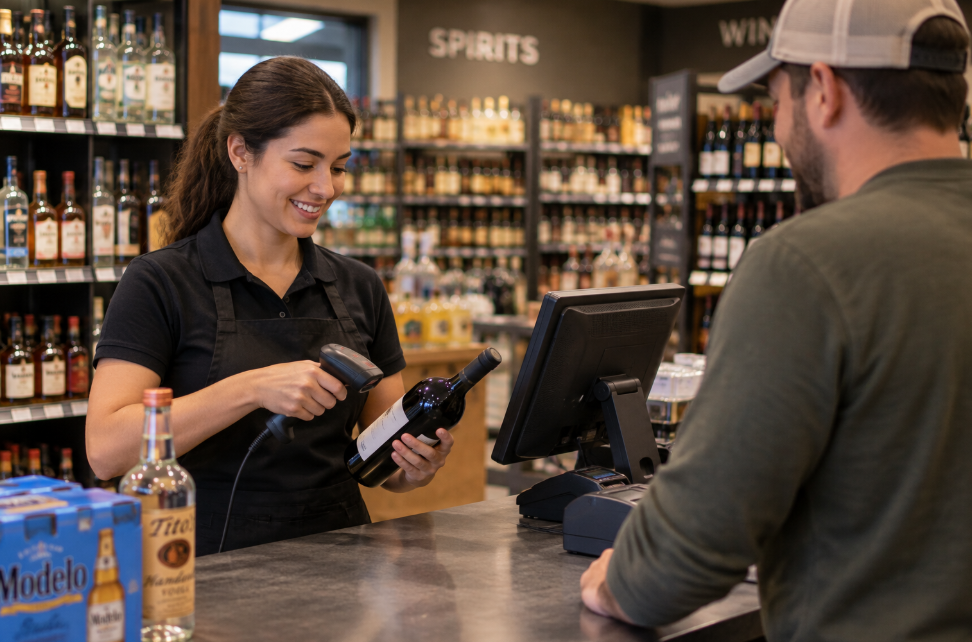
Traditional point-of-sale systems primarily focused on transactions.
A customer brought a bottle to the register. The employee scanned it. The POS processed the transaction, reduced the inventory quantity, and recorded the sale.
Everything surrounding that transaction was often still extremely manual.
When a distributor delivery arrived, somebody had to receive it.
When costs changed, somebody had to notice.
When inventory became inaccurate, somebody had to count it.
When products stopped selling, somebody had to run reports and find them.
When inventory ran low, somebody had to figure out what to order.
The software contained information, but employees still had to constantly enter, review, organize, and act on that information.
Automation changes that relationship.
Instead of asking employees to continually feed information into the software, the software can increasingly do the administrative work and bring the important decisions to the owner.
Automated Invoice Receiving Changes the Back Office
Receiving distributor invoices is a perfect example.
In a traditional liquor store environment, receiving a delivery can require someone to manually enter quantities, costs, products, and other invoice information.
That process takes time and creates opportunities for mistakes.
Bevly’s automated invoice receiving system is designed to import distributor information into the receiving workflow so owners can spend their time reviewing information rather than retyping it.
That distinction is important.
The goal of automation isn’t simply to make data entry faster.
The goal is to eliminate as much unnecessary data entry as possible.
When invoice information flows into your management system, inventory quantities can be updated, costs can be reviewed, margins can be calculated, and discrepancies can be identified much more efficiently.
Instead of spending your time creating the data, you can spend your time acting on it.
Automation Can Help Protect Profit Margins
Distributor costs change.
The problem is that liquor store owners don’t always catch those changes immediately.
If your cost on a product increases but your retail price stays the same, your gross margin falls.
Multiply that across hundreds or thousands of products and small unnoticed cost increases can become a meaningful profitability problem.
Bevly is designed to make cost and margin information more visible during receiving.
Rather than relying on someone to remember what a bottle cost on the previous delivery, the system can provide the information needed to identify changes and determine whether retail pricing needs attention.
That turns receiving into more than an inventory function.
It becomes an opportunity to protect profitability.
Better Automation Means Better Inventory Management
Inventory is one of the largest investments most liquor store owners make.
Every bottle sitting on the shelf represents cash that has already been spent.
That means owners need to know:
- What is selling?
- What isn’t selling?
- What is running low?
- What has been sitting for months?
- What should be reordered?
- What shouldn’t be reordered?
- Where are inventory discrepancies occurring?
Automation makes answering these questions significantly easier.
Instead of relying exclusively on periodic manual reviews, modern liquor store management software can continually organize sales, purchasing, receiving, and inventory information.
That gives owners better visibility into what is happening inside the store and allows them to manage inventory based on actual performance rather than intuition alone.
Find Dead Products Before They Consume More Capital
One of the biggest opportunities created by better liquor store software is the ability to identify inventory that simply isn’t moving.
Dead products create multiple problems.
The store already spent money purchasing them. They occupy valuable shelf space. They tie up working capital. And they prevent that money and space from being invested in products customers actually want.
A store could appear to have an impressive inventory value while a substantial portion of that money is trapped in products generating little or no return.
Bevly gives liquor retailers reporting designed to help identify slow-moving and dead products so owners can decide whether to mark them down, discontinue them, promote them, or otherwise turn stagnant inventory back into cash.
Automation doesn’t just help you manage inventory. It can help you determine whether that inventory deserves to be there in the first place.
Inventory Audits Don’t Have to Be a Major Event
Inventory counts have traditionally been another labor-intensive part of liquor store ownership.
Employees count bottles. Numbers are written down or entered into spreadsheets. Results are compared against the POS. Discrepancies have to be investigated.
Bevly brings inventory auditing onto mobile devices.
Employees can scan and count inventory throughout the store, while the system helps consolidate the information and identify variances.
That makes it easier to perform audits more frequently instead of waiting until inventory problems become large enough to demand attention.
More frequent inventory visibility can also help owners identify shrinkage, receiving mistakes, incorrect adjustments, and other discrepancies sooner.
Purchasing Can Become More Data-Driven
Ordering is another area where automation can fundamentally change liquor store ownership.
Traditionally, purchasing often depends heavily on the owner’s knowledge of the store.
Experienced owners walk the aisles, check shelves, look at reports, talk with distributor representatives, and decide what needs to be reordered.
Experience will always matter.
But software can give that experience much better information.
Bevly can use inventory levels, sales velocity, pars, and other operational information to help streamline purchase-order creation and identify products requiring attention.
The owner remains in control of purchasing decisions, but doesn’t have to spend as much time gathering the information needed to make them.
That is one of the most important distinctions in retail automation.
Good automation doesn’t replace the liquor store owner. It gives the owner better information and removes lower-value administrative work.
Managing a Liquor Store From Anywhere
Automation also changes where liquor store management happens.
Owners shouldn’t necessarily have to sit in the back office to understand what is happening in their business.
With remote and mobile access, liquor store owners can review sales, inventory, orders, invoices, pricing information, and other operational data without constantly being tied to a store computer.
That becomes particularly valuable for multi-store operators.
Instead of relying on phone calls, spreadsheets, and end-of-day conversations to understand each location, centralized software can provide greater visibility across the business.
The result is not simply convenience.
It can create a more scalable management model.
From Point-of-Sale Software to a Liquor Store Operating System
This is ultimately where Bevly is changing the definition of liquor store software.
A traditional POS is centered around the register.
Bevly is designed around the operation.
Its purpose extends beyond ringing up customers to connecting many of the workflows that happen before and after the sale, including purchasing, distributor invoices, receiving, inventory, payments, audits, reporting, pricing, and profitability analysis.
That represents an important change in what liquor store owners should expect from technology.
Your software shouldn’t create more work for you. It should eliminate work.
It shouldn’t simply tell you what happened yesterday.
It should help you determine what needs attention today.
And it shouldn’t just collect data.
It should turn that data into information you can actually use to operate a more efficient and profitable store.
Automation Gives Liquor Store Owners Their Time Back
There will always be work involved in operating a successful liquor store.
Customers still need service. Employees still need management. Displays need to be built. Distributor relationships need to be maintained. New products need to be evaluated. Pricing strategies need to be developed.
Those are valuable uses of an owner’s time.
Typing information from an invoice into a computer isn’t.
Manually searching thousands of SKUs to find products that haven’t sold isn’t.
Comparing spreadsheets to determine whether inventory is accurate isn’t.
Repetitive administrative work consumes time without necessarily creating additional value for the business.
Automation allows liquor store owners to shift that time toward the decisions and activities that can actually improve the store.
The Future of Liquor Store Ownership Is More Automated
The next generation of liquor store management isn’t about replacing owners, managers, or employees.
It’s about eliminating unnecessary work.
The more that software can automate receiving, inventory updates, purchasing workflows, payments, audits, cost monitoring, and reporting, the more time owners can spend on the parts of the business where their judgment actually matters.
That’s the fundamental change Bevly is bringing to liquor store management.
Software shouldn’t simply help you keep records of your liquor store. It should help you run it.
See What Liquor Store Automation Can Do for Your Business
If your store is still spending hours entering invoices, updating inventory, creating purchase orders, counting products, checking margins, or searching for slow-moving inventory, it may be time to see what a more automated approach looks like.
Schedule a Bevly demo today and see how Bevly can help automate the repetitive work behind liquor store management so you can spend more time improving and growing your business.
“`